CURRENT EXHIBITION
Bea Bonafini
Valencia
22 May — 24 July 2026
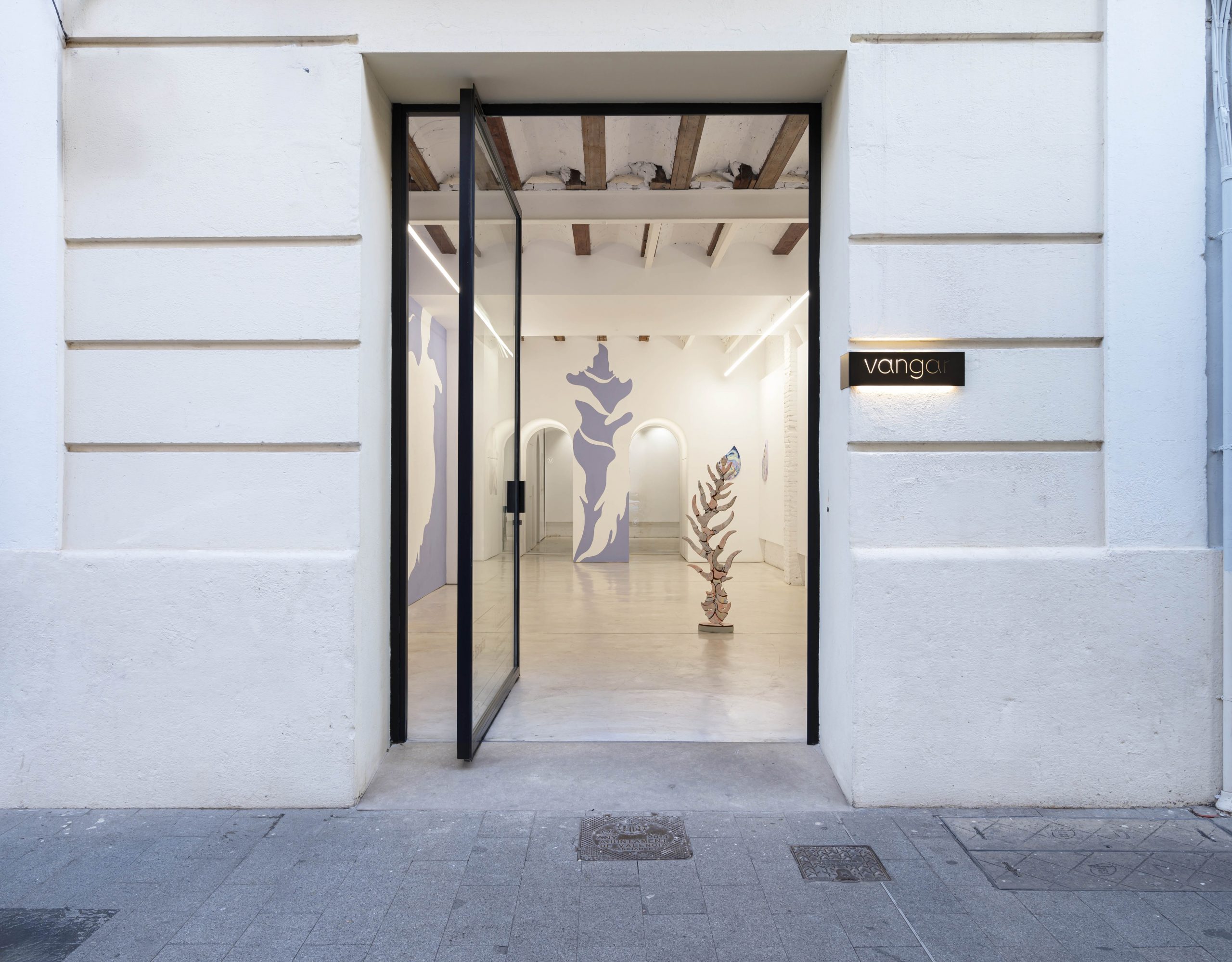
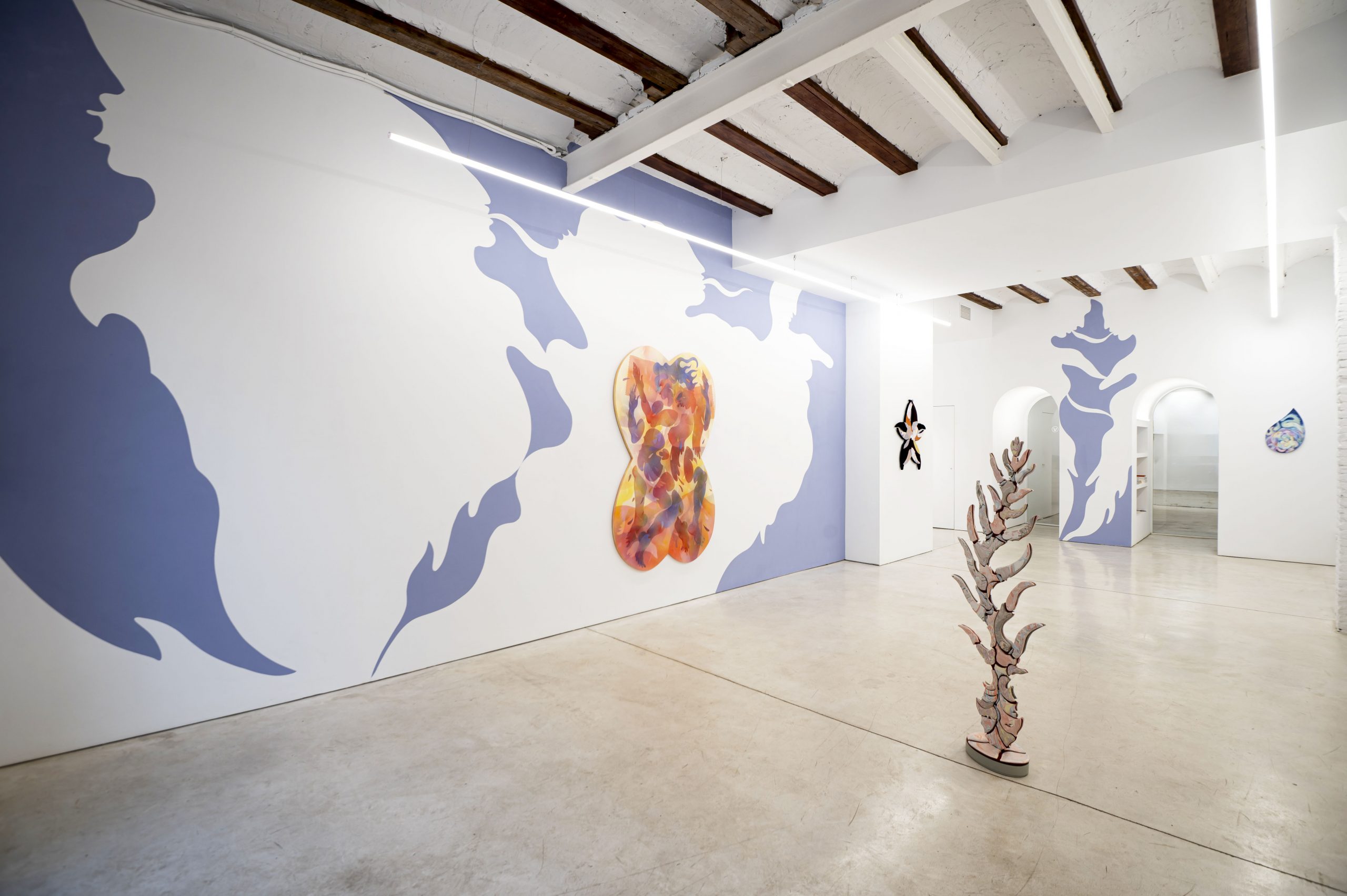
Intangible
Like the work “4” on display in the exhibition—a reference to the Tarot card of The Hanged Man, in which a man is suspended by his leg, head down, and in that position is able to view the world from a different perspective—Bea Bonafini’s works are an invitation to approach life with a renewed and open vision, one that goes beyond the visible or the tangible.
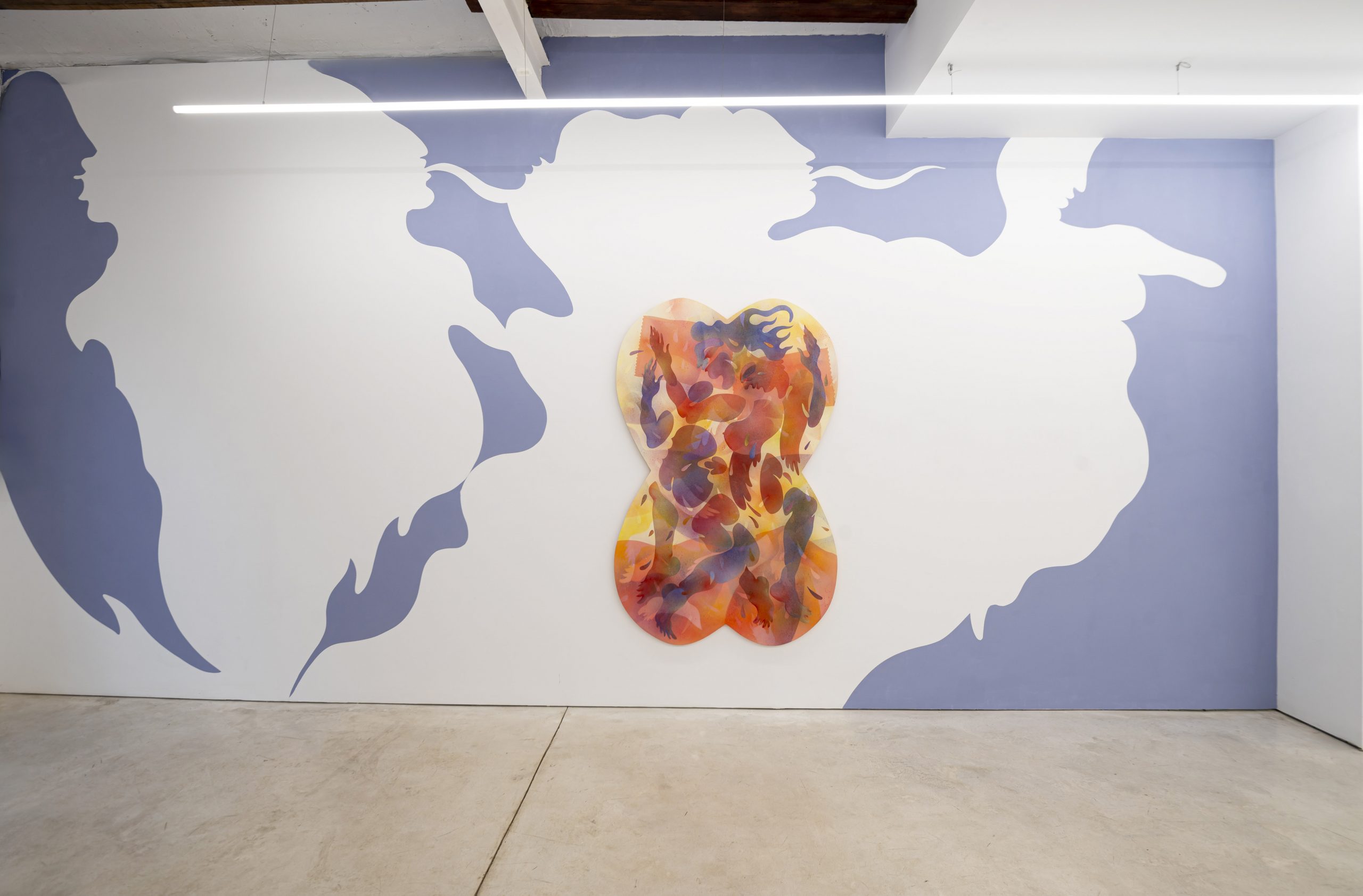
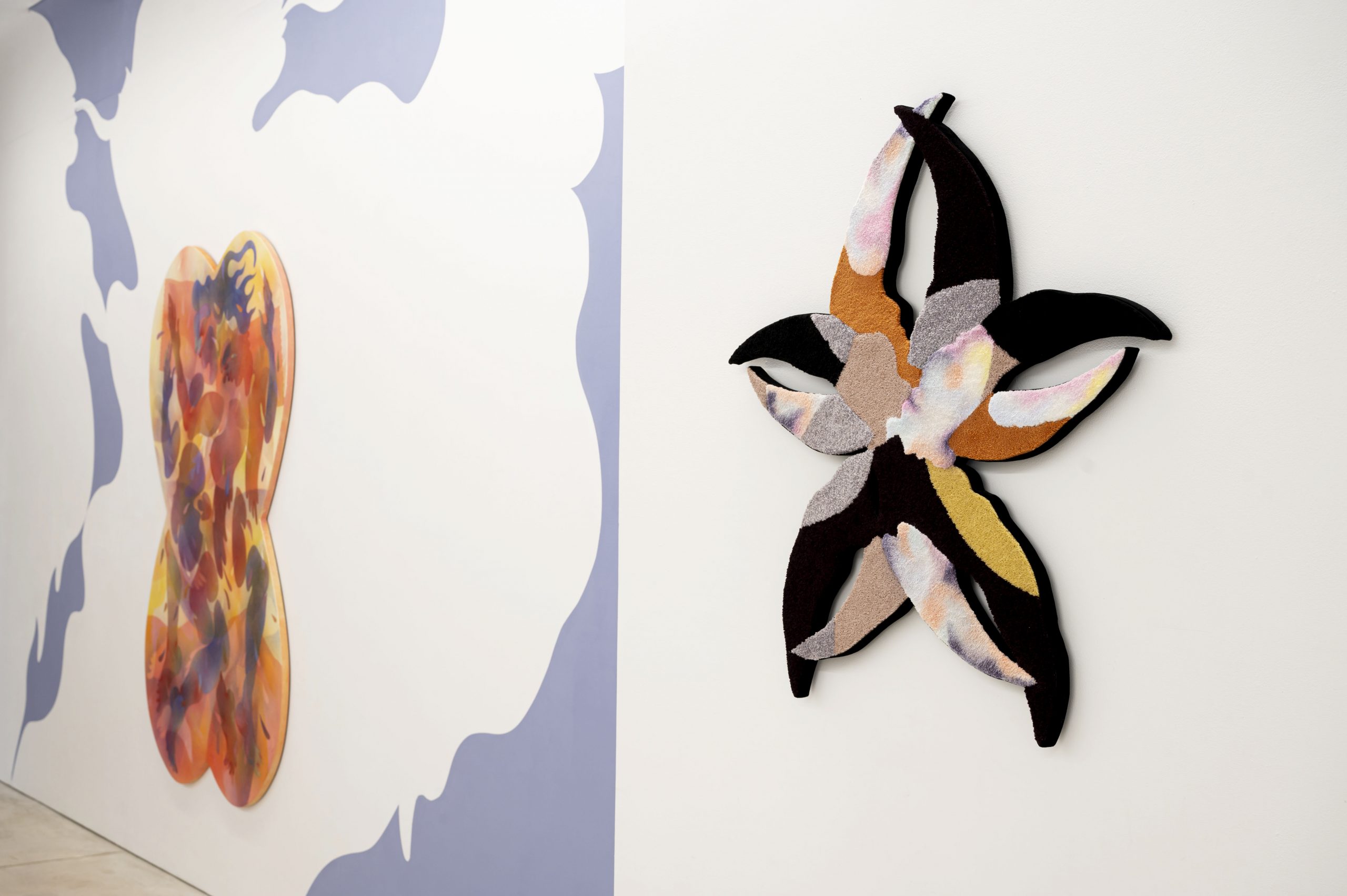
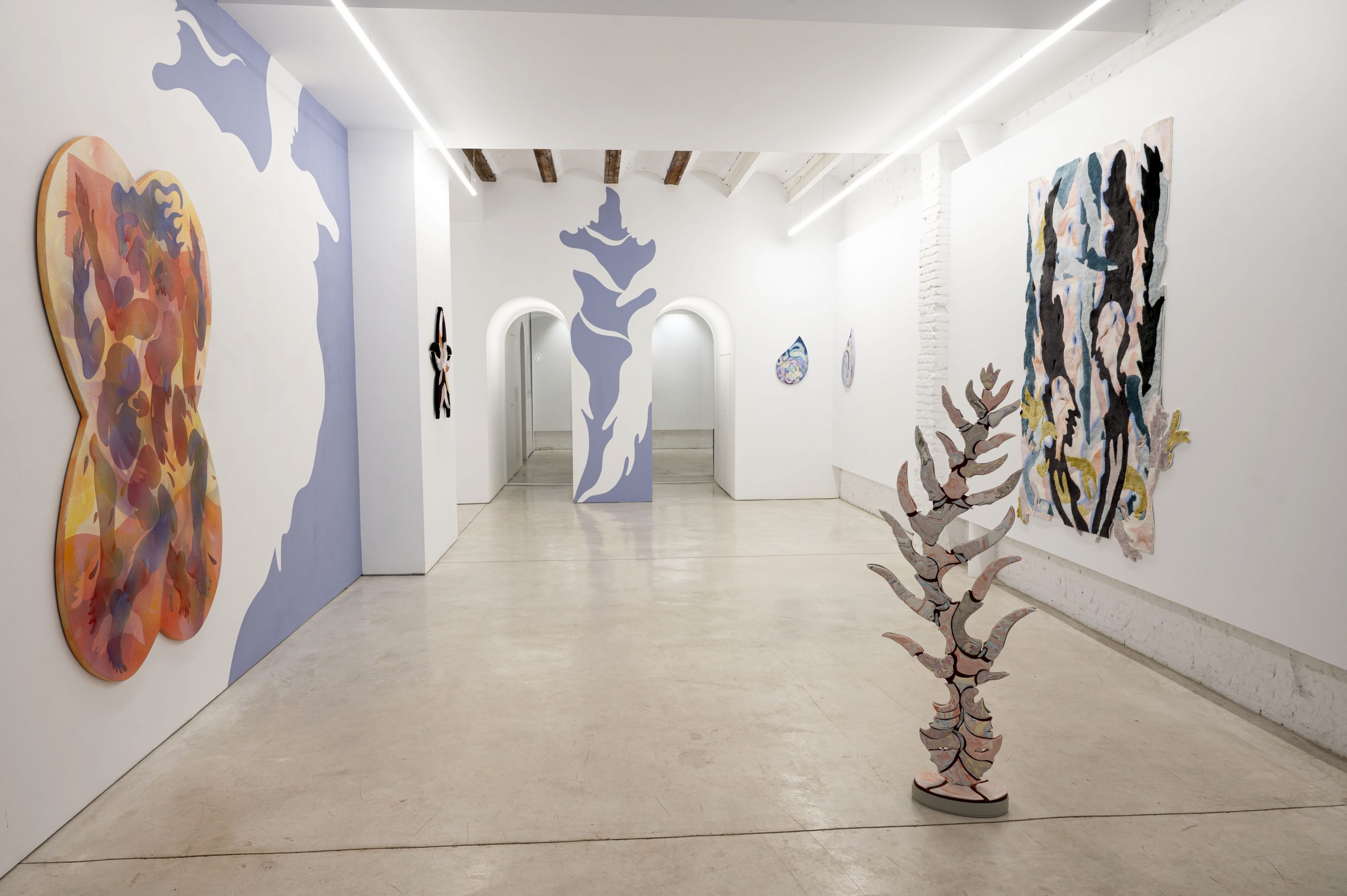
Animal and anthropomorphic forms intertwine in the artist’s works; there is never any fixity, but rather a perpetual becoming, which is also evident in the titles of the works themselves—unfinished actions such as Ablaze, Air unravelling, Becoming, Tumble Dry, Swallowing earth, Waters ferment. The works speak of birth, of the sexual act that leads to new life, and of death, which is, in fact, transformation. They speak of the transmigration of souls, of metamorphosis and dreams. Of intangible and profoundly mysterious relationships, which lead to the sublimation of the self in physical fusion during the act of love, like in the artwork Orange is young.
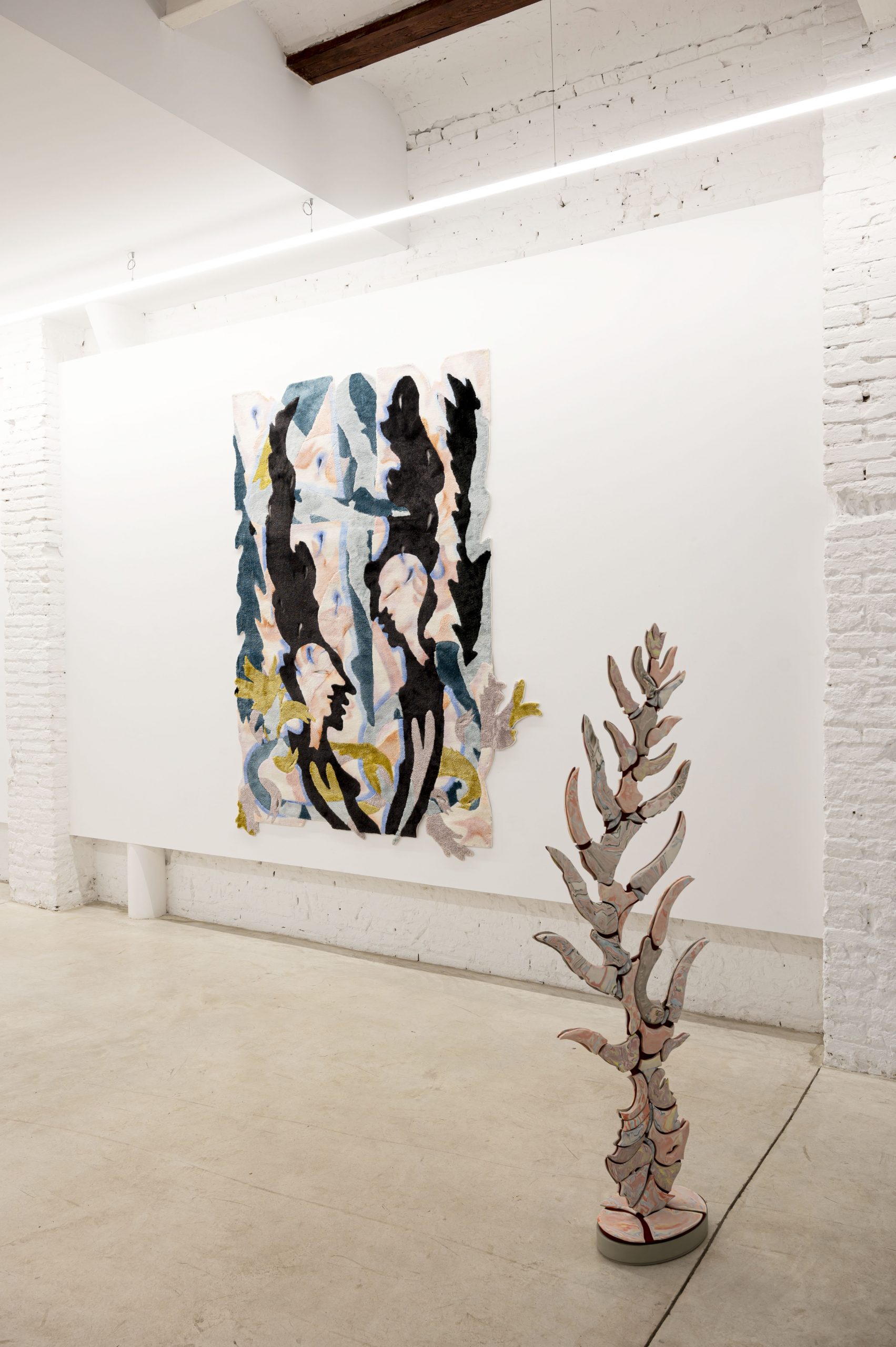
Almost as if in an elusive movement of ancestral matter, the figures that populate Bonafini’s universe represent the rearrangement of atoms and minute particles that have constituted the life of the cosmos since its very dawn. Material research is central to the artist’s work: she uses substrates such as cork, wood, cotton from old trousseaus, rugs, recycled fabrics and nerikomi ceramics, on which she experiments with pastels, oil, acrylics, watercolour pencils and collage. In a global historical period of ever-deepening conflicts and polarisation, the work of art serves as a resource for developing a sensibility capable of transcending reality, inviting us in, engaging us and prompting us to question what unites us as human beings in our present. And what are we, if not part of a whole, which is not solely human but an ecosystem comprising animals, plants, minerals and even inanimate beings? “Every conversation, every act of thought is an exchange of spiritual identity, a mosaic of personalities and little selves that come from elsewhere and never cease to travel,” writes Emanuele Coccia in his Metamorphoses, one of the texts that inspired the creation of the works on display. The artist recently stated that we must flow with the movements of nature and not oppose them, and at the same time explained her choice to work with textiles rather than other materials. The title of the textile work Summer’s teeth, created during a residency in Greece is borrowed from a poem by Ocean Vuong, in which the author uses this image to define the intertwining of desire, love, vulnerability and mortality. The tooth is in fact associated with a blade, just as the figures in the work resemble crescents or sickles, evoking concepts of growth and expansion as well as the depiction of the sickle as an object associated with death. With the nerikomi ceramic work Swallowing Earth, the artist aims to highlight roots—elements that are generally found underground and whose importance is not fully appreciated, yet which are there to sustain life— therefore an anthropomorphic presence is visible. Among the experiences that inspired the creation of the works on display, in addition to pregnancy, is Bea Bonafini’s trip to Japan: in the work Ama, created with acrylic on cork on wood, the title refers to a female diver who holds her breath in search of pearls in the depths of the sea. The connection with water is often present in Bonafini’s practice; it harks back to the panta rei or the Japanese Tao that has guided her recent artistic research. In Waters Ferment, two human figures emerge from forms reminiscent of drops or pregnant bellies, in a celebration of life taking shape within an aquatic ecosystem. Life is possible thanks to a combination of elements, as suggested by the title of the new work Amalgamation, in the artist’s own words: “For this work, I imagine an intergenerational chain that spans time and space, an undefined and suspended space. The figures are hybrid, mutant: some are pregnant, others have tails, evoking our non-human ancestors as well. Uniting them are umbilical cords that span the ages, creating continuity. The pastel strokes suggest a desire for contact and closeness, imagining the ways in which these presences would like to embrace one another, like one big family that transcends time.”
Fanny Borel.